The Pulse
Altman Confirms OpenAI Will Build a Humanoid Robot
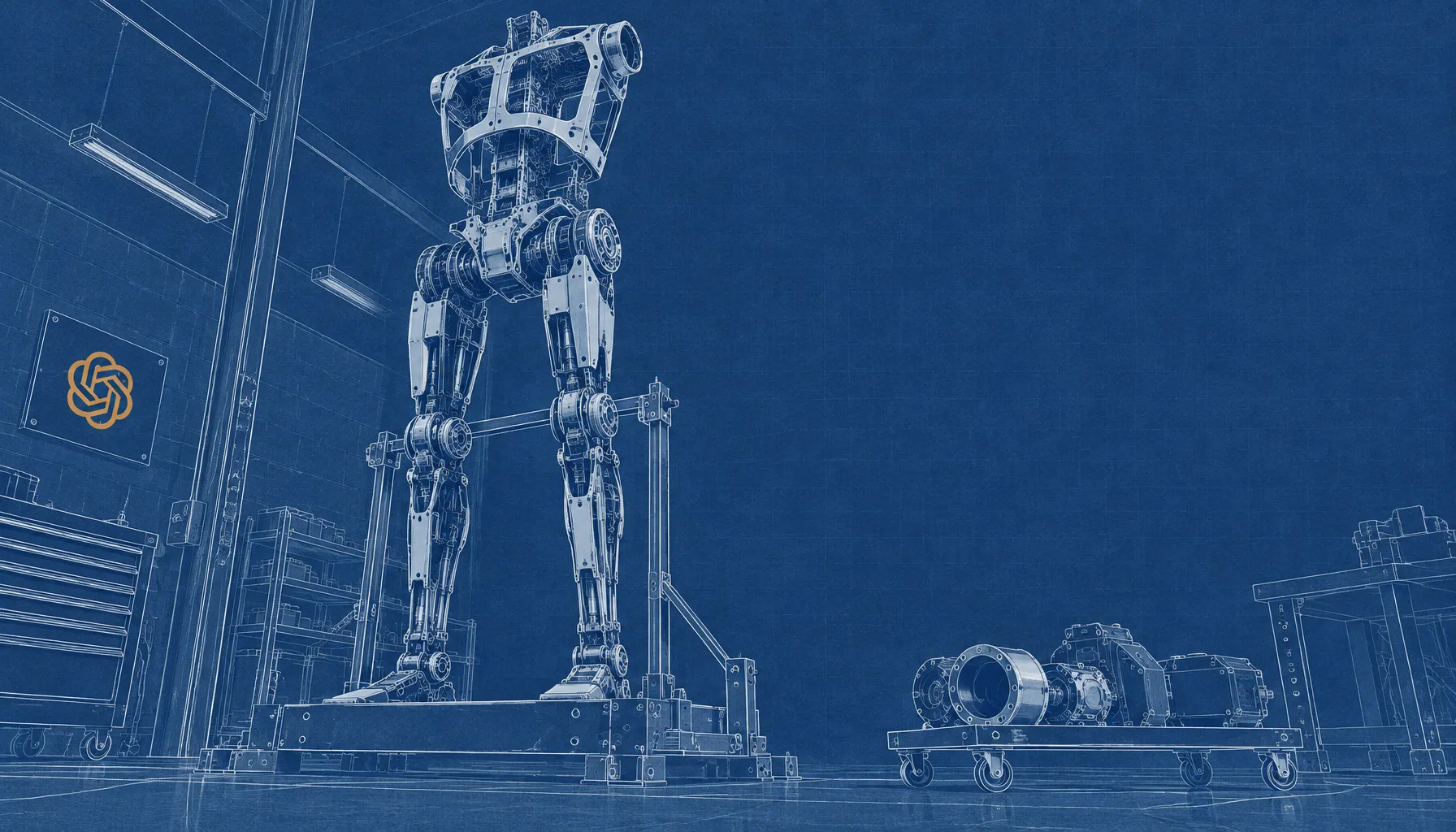
Sam Altman said OpenAI will build humanoid robots, while arguing that the intelligence behind the hardware matters more than its shape. The Sept. 1 podcast interview offers no prototype, product schedule or release plan; Engadget revisited
AI.info Team · Written with AI · fact-checked ·
Sam Altman has answered whether OpenAI intends to build a humanoid robot: yes. The harder question—what the machine will do, and when anyone will see it—remains open. Altman made the commitment in a Sources podcast interview released Sept. 1; Engadget revisited the remarks on Oct. 17, but OpenAI has not announced a prototype or release plan.
Altman puts the robot’s intelligence ahead of its shape
Asked what OpenAI was building, Altman said the company would pursue a humanoid as well as other forms. He argued that a human-shaped machine makes practical sense in places designed around people: it could open doors, use computers and operate equipment built for human bodies. He also noted that robots working in data centers could need different forms.
“I think all of that is less important than really figuring out the brain that makes the robot work.”
Sam Altman, CEO of OpenAI, on the Sources podcast
The distinction sets OpenAI’s stated priority: developing the intelligence that lets a machine act usefully, rather than treating a familiar silhouette as the main achievement. Altman did not describe a design, capabilities or a timetable for the humanoid in the interview.
A personal robot is a long-term ambition
When asked whether he imagined a personal robot for everyone, Altman said that was not the first priority. He pointed instead to robots that could help build data centers or other robots, while describing personal machines as a possibility for the future. He said he would like one that could handle tasks he does not want to do.
Those remarks leave the near-term application broad. Altman did not identify a first job for OpenAI’s humanoid, say whether it would work in the company’s own facilities, or explain how the company would test its performance outside controlled settings. The interview establishes intent, not a product roadmap.
Hardware work still sits between intent and a robot
Making a machine operate in human spaces requires more than a model that can interpret instructions. A robot must perceive its surroundings, coordinate movement and adjust when objects or conditions differ from expectations. Engadget’s Oct. 17 report described OpenAI robotics roles covering motion control, state estimation, actuator control and whole-robot behavior, alongside machine-learning infrastructure for physical AI.
The hiring areas point to work across both software and physical systems, but they do not establish that OpenAI has built a working humanoid. Nor did Altman offer manufacturing plans, a price or a date when a robot might be available to customers. OpenAI’s public commitment is clear; the machine itself remains unspecified.
The Sept. 1 remarks are not a product launch
Altman’s statement appeared in the launch episode of the Sources podcast, which the show’s official announcement said would be released Sept. 1. The Oct. 17 Engadget story brought the answer back into view, but it did not describe a new OpenAI unveiling. For now, the concrete news is the CEO’s stated intention to build humanoid and other robots—and his view that making them intelligent is the harder task.