The Pulse
Robbyant releases robot navigation model with reusable spatial memory
Robbyant has released LingBot-Navi, a navigation model designed to reuse information from earlier observations. The release includes inference code, model weights and a dataset of reconstructed real-world scenes.
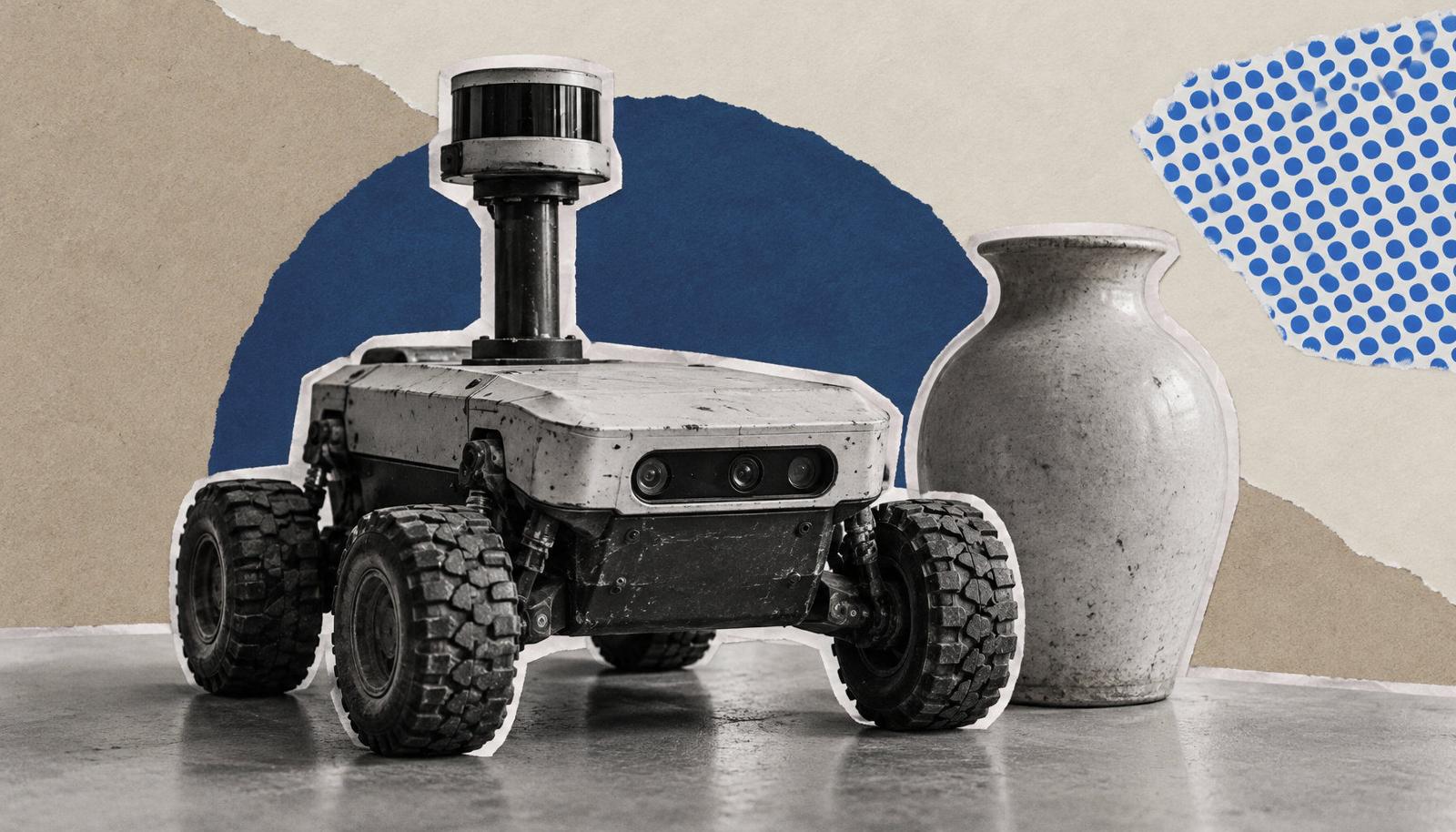
Robbyant has released LingBot-Navi, a robot navigation model designed to retain spatial information between tasks rather than rely solely on its current view. The company describes the model in a public repository that includes inference code, model weights and a dataset, released on November 26.
The release includes a dataset of 511 reconstructed real-world scenes. A separate test set comprises 36 scenes included in the full dataset.
Memory across tasks
LingBot-Navi connects earlier observations with the current image and language through what Robbyant calls spatial memory. It is designed to use those observations to interpret new requests and reach targets outside the current view.
The model combines a spatial memory encoder, a vision-language decoder and a trajectory decoder. The repository lists object grounding, image localization, spatial question answering and 3D route prediction among the tasks supported by that architecture.
It attaches visual features to reconstructed surfaces and organizes them into spatial tokens across local reconstruction blocks. The repository also describes a sequential-task benchmark for studying how memory is reused across successive navigation goals.
Mapping and reconstruction
Robbyant also describes LingBot-Map 2.0, a streaming 3D reconstruction model, on a separate project page. The page describes a process that expands spatial memory with incoming views, revises it using historical information and then resumes processing with the updated memory.
The project page says the memory-revision step can be triggered at any time without loop detection, pose-graph optimization or post-processing.
The LingBot-Navi repository includes an example that builds spatial memory from a reconstructed scene. Its example rebuilds memory from six recorded trajectory segments, producing 11,394 points after preprocessing; each block keeps its own local coordinate frame.
LingBot-Map reconstructs the blocks in that example, while Qwen3.5-4B supplies their visual features. The example contains 387 capture frames across the six segments.
What the demonstrations show
One demonstration uses the memory to distinguish similar objects by their surroundings: a bar chair beside a pink vase and another beside a striped vase. Another queries the memory with an image to estimate the camera’s position and orientation.
For that example, the repository reports a position error of 0.374 meters and an orientation error of 4.420 degrees against the query camera pose. A further demonstration predicts a route and uses a local planner to execute it in a reconstructed scene; the repository says that demonstration uses kinematic updates without collision physics.
The repository also includes an exploration example in which the model searches for a table using a single memory block. If the model reports that the table is absent, it predicts the next frontier to explore from that memory.
Running the release
The listed installation requirements are Linux x86_64, Python 3.10 or later and an NVIDIA GPU. Rendering also requires the CUDA 12.8 toolkit and a C++ compiler.
The repository provides examples for building memory, identifying objects, localizing an image, predicting a route and following it with a local planner. Its benchmark instructions reuse the environment from installation and add a headless Habitat-Sim build for evaluation.
Sources
- Original source Robbyant “GitHub - Robbyant/lingbot-navi: LingBot-Navi: Scene‑aware Navigation with Spatial Memory” github.com
Other pages read
- Robbyant “LingBot-Map 2.0 Reconsolidatable Streaming 3D Reconstruction” technology.robbyant.com
Related stories
- Waddle-1 scores 81.4% on Robocurve's real-robot benchmark, with no model-call cap
- Tencent releases DFly2 draft model weights and training code
- Hugging Face patches Transformers for vLLM and model issues
- SenseTime open-sources image model with text self-correction
- Ant Ling releases LingSante-3.1-flash, an open-weight medical model